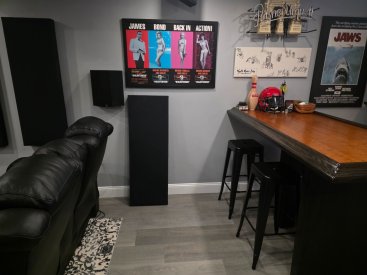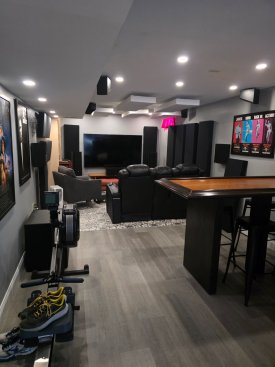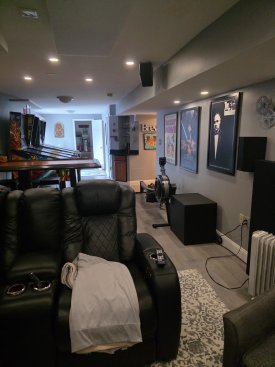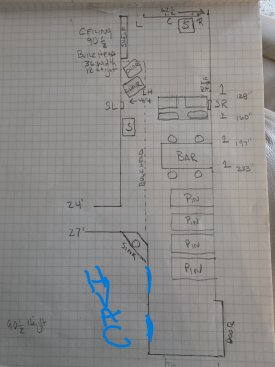






I've setup my home theater in one end of a very long and narrow rectangle space in my basement - for simplicity, think 12'x40' ish. I have a ton of panels in the space between my seats and the screen including walls and ceilings which was a HUGE improvement. But, hearing ambient noise from HVAC and sounds coming down the hall from upstairs drives me crazy. And, my wife would appreciate any decrease at all in sound making it's way upstairs. While a permanent wall would be the best solution, I'm not sure I want to make that leap as it blocks off the screen from the rest of the space which is often used for entertainment while watching the screen from a distance. But, I'd love to block as much sound as possible. Any thoughts on maybe building 3 movable bogo panels on wheels to help reduce sound bleeding from the space? And, since I'm trying to block as much sound as possible, my questions include:
- should I build with a thin solid plywood backing or center (or even a pegboard with little holes) vs just cloth over Rockwool which I did for the panels on the walls and ceiling?
- If I do use a solid backing / center, is there any benefit to leaving an air gap between the solid panel and the insulation (similar to the gap I put when mounting other panels)?


 Hey, its a domestic room not a professional studio...

 , see attached drawing (1 block = 1 ft) and photos. Note, things have shifted just a bit since I made this drawing. I got rid of 1 chair, added 1 pinball machine, and put up 2 more height channels which shifted the placement of the 2 in the drawing as a result. The photos are current.