







Bob Rapoport
Music Reviewer
Thread Starter
- Joined
- Jan 29, 2018
- Posts
- 176
More
- Preamp, Processor or Receiver
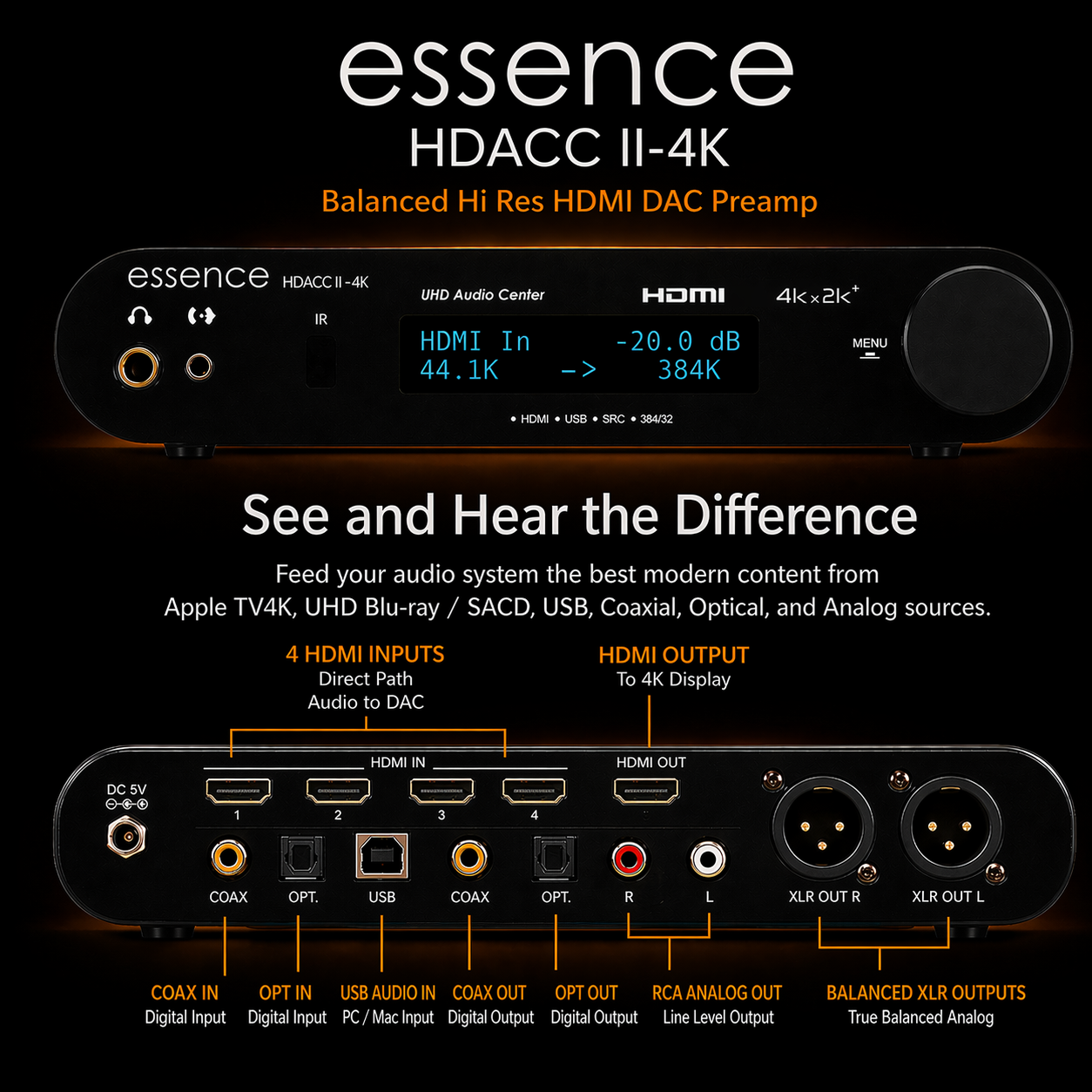
- Essence HDACC II-4K
- Main Amp
- Essence DPA-440
- Universal / Blu-ray / CD Player
- Sony 4K
- Front Speakers
- Essence Electrostats
- Center Channel Speaker
- Essence
- Surround Speakers
- Essence
- Subwoofers
- Essence
- Screen
- Screen Goo painted screen, 4 coats
- Video Display Device
- Vizio M70
- Remote Control
- Essence
Part 1: Hear What You've Been Missing
Audiophiles spend a lot of money improving their listening rooms by damping out the reflections. We position speakers to the inch, experiment with furniture, install acoustic treatments, and occasionally rearrange the living room when nobody's looking.
But there's one stubborn problem.
The room insists on joining the performance.
When Good Sound Takes a Bad Detour
Sound travels directly from your speakers to your ears. But some of it takes the scenic route, bouncing off walls, floors, ceilings, and furniture before arriving many milliseconds later.
Those delayed reflections interfere with the direct sound of the recording in two ways when they intersect:
- In-phase reflections form peaks, adding excessive brightness.
- Out-of-phase reflections cancel each other out, forming dips that disrupt the bass and stereo imaging.
I call it room coloration—your listening room adding its own signature to the recording.
Even expensive loudspeakers must contend with physics. And physics doesn't care what your speakers cost.

What If We Took the Room Out of the Equation?
Our recent consumer survey suggested something worth considering: Much of our listening isn't about music. It's about understanding the spoken word. The soundtracks in our favorite movies and TV shows have dialogue that must be heard to keep up with the story.Consider Guy Richie's MobLand on Paramount TV+. Tom Hardy's softly-spoken Harry delivers crucial dialogue through a thick British accent. Miss a few words and suddenly you lose the plot.
Turning up the volume may help—until the soundtrack explodes into action and you're forced to reach for the remote to turn it down.
What good is spectacular sound if you can't follow the story?
Personal listening offers another approach. By delivering sound directly to your ears, it bypasses the room's reflections and coloration.
Meet Earis Premium

Earis Premium combines German engineering, dedicated wireless digital audio, and a comfortable 2.2 oz under-chin receiver with volume control.
Rather than simply making everything louder, it lets listeners adjust the sound to suit their hearing and preferences instantly without losing immersion in the story.
A built-in microphone lets you hear someone speaking without removing the headset / receiver. Independent volume and balance controls add flexibility, while private listening keeps late-night television from disturbing anyone else.
Your spouse may appreciate that last feature even more than you do.
Earis Premium's development is laboratory-driven by guidance from Germany's Fraunhofer Institute for Digital Media Technology (IDMT), whose research includes psychoacoustics, hearing perception, and speech intelligibility.

Keep Your Loudspeakers. Expand Your Thinking.
I'm not suggesting you abandon your cherished loudspeakers or the pleasure of a great listening room.I'm suggesting that television and movie soundtracks deserve a specialized listening solution, not just another headphone, but a device engineered to excel with the entire soundtrack, bringing the production to life. As near as I can tell, Earis Premium is the best-in-class solution.
Take the room out of the equation. You might be surprised by what you've been missing.
Last edited: