






(September 23, 2026) CEDIA Expo has never been short on new gear, fresh ideas, or ambitious technologies, and 2026 was no exception. Across the show floor, manufacturers brought everything from new loudspeakers and subwoofers to processing platforms, display technologies, and acoustic solutions. Out of everything I experienced during the show, only a small group ultimately earned AV NIRVANA’s Best of Show recognition.
This year, we handed out just 15 Best of Show Awards. That number was intentionally kept limited, with each selection reserved for a new product, technology, or concept that made a particularly strong impression. Some were easy calls that stood out almost immediately during a demonstration or conversation. Others took a little more time to settle in, lingering in my thoughts as I moved through the rest of the floor and exhibits. In those cases, the fact that I kept coming back to something often said quite a bit about the impression it had made.
As in the past, AV NIRVANA’s Best of Show Awards remain independently selected. There’s no entry fee, nomination fee, or purchase requirement to be considered, and manufacturers did not pay to receive a physical award or secure inclusion in this report. Winners were chosen entirely at AV NIRVANA’s editorial discretion based on encounters during the show. It’s an approach that we believe helps our awards stand apart in the industry.
Ultimately, these 15 selections represent the products, technologies, and ideas that distinguished themselves in an exceptionally busy CEDIA field. Some introduced something genuinely new. Others took a familiar concept and pushed it in a smarter, more interesting direction. All are, simply put, awesome in their own right. The winners that follow are presented alphabetically by company name, not in order of importance or preference.
Throughout this report, you’ll also find links to our show floor interviews and video coverage, featuring conversations with company representatives and, in some cases, the people directly responsible for creating the products and technologies being recognized. We’re still working through the considerable amount of content captured at CEDIA 2026, so not every related video is live just yet. We’ll continue adding those interviews and links as they’re published, so be sure to check back as our coverage of this year’s Best of Show winners grows.
AcustiMOD's New Modular Acoustic System

For roughly two decades, Officina Acustica has operated at the rarefied end of private cinema design, creating complete acoustic interiors where architecture, aesthetics, isolation, and acoustic performance are engineered as parts of the same system. Founder Maurizio Conti launched the company in 2005 after becoming frustrated with the way high-performance private cinemas were traditionally constructed, and that thinking eventually evolved into the sophisticated, made-in-Italy environments Officina Acustica is known for today. Peter Aylett, an Officina Acustica partner and longtime contributor to CEDIA’s technical standards efforts, brings an equally serious engineering pedigree to the mix. He chaired the working group responsible for RP22, CEDIA and CTA’s recommended practice for immersive audio system design, making this a team that has spent years not only building elite rooms but also helping to define what proper performance should look like in the first place.
That’s what makes acustiMOD so interesting. In many ways, it feels like a genuine trickle-down of Officina Acustica’s knowledge into a modular system that far more enthusiasts and integrators can realistically access. Rather than simply selling decorative absorption panels, acustiMOD takes a more engineered approach, with interchangeable internal elements that can provide absorption, diffraction, or hybrid acoustic behavior, removable fabric finishes, and a forthcoming room configurator designed to help determine what treatment a space actually needs. The system is designed in Italy but manufactured and stocked in the United States, which should also make it dramatically easier and faster to deploy than a fully bespoke Officina Acustica room. There’s plenty to like aesthetically too, as the finished modules look polished enough to become part of the room rather than something that needs to be hidden. What I really like about acustiMOD is that it takes decades of experience designing some seriously ambitious private cinemas and puts a meaningful slice of that knowledge within reach of a much wider group of enthusiasts and integrators. That alone made it an easy Best of Show selection.
ASCENDO Immersive Audio's Panoramic Surface On-Wall Speaker
ASCENDO used CEDIA 2026 to debut its Panoramic Surface On-Wall, and, to be quite frank, the speaker rocked the show. Instead of using conventional cone and high-frequency drivers to handle surround and height duties, Panoramic Surface employs a proprietary full-range composite radiating surface that spreads sound across an exceptionally wide area. ASCENDO says its radiation pattern approaches 180 degrees up to 20 kHz, aiming to create a more continuous sound field while reducing the tendency for listeners to localize individual surround or overhead speakers. It also helps address another familiar problem in multiseat theaters, where someone sitting close to a conventional surround can end up hearing that speaker far more prominently than listeners farther away. The shallow on-wall design also brings the radiating surface close to the architectural boundary, helping reduce speaker-boundary interactions.
Of course, an interesting design only goes so far if it doesn't deliver in the battlefield, and my first experience with Panoramic Surface was memorable. ASCENDO used the speakers for surround and overhead duties in Sound Room 10, where they were part of a complete theater featuring AcustiMOD, Christie, madVR Labs, Moovia, Seymour Screen Excellence, and StormAudio. During the immersive demo material I heard, the surround information seemed to flow around and above the seating area with precision. Seamless is probably the best word I can use to describe it. I've heard a lot of ambitious immersive audio systems over the years, but I can't remember hearing one present the surrounding sound field quite this way. Panoramic Surface introduces a loudspeaker technology I haven't encountered in residential home theater before, and after hearing what ASCENDO accomplished with it at CEDIA, I have a feeling we're going to see quite a bit more of this concept. It was an easy Best of Show choice.
Barco Residential's Runar HDR, Plus Focal's 1000 Series and Naim Amplification
Some demonstrations impress you. Others have a way of recalibrating what you think is possible. And that’s exactly what happened when I walked into the Barco Residential, Focal, and Naim theater at CEDIA 2026. At the center of the visual presentation was Barco’s new Runar HDR, a 0.9 mm pixel-pitch MicroLED video wall capable of reaching 1,000 nits while dropping all the way down to a claimed 0.005-nit black level. Those numbers help explain what I saw, but they don’t adequately describe it. HDR highlights had tremendous intensity, blacks looked extraordinarily deep, and the resulting contrast gave imagery an almost startling sense of dimension and depth. Watching Kaleidescape content with madVR processing on the Runar was one of those rare show experiences where the picture simply demanded your attention. To borrow a favorite expression from legendary college basketball announcer Dick Vitale, its performance possessed the three S’s: Super! Scintillating! and Sensational!
It really was that amazing.
And somehow, the audio system managed not to get lost in the glow of a $420,000 video wall. Focal built the 7.0.4 theater around its 1000 Series architectural loudspeakers and in-wall subwoofers, with an Astral 16 handling processing and amplification duties alongside Naim CI Series electronics. The presentation had the scale, dynamics, detail, and sheer physical presence necessary to stand shoulder to shoulder with Runar's perfect image, and that balance is ultimately what made this room so memorable. Barco completed its acquisition of Focal and Naim's parent company, VerVent, earlier this year, and CEDIA offered one of the first opportunities to experience what those brands can accomplish together under the same umbrella. The result wasn’t a great display with a nice audio system attached, or vice versa. It was one complete audiovisual presentation, and it smacked me squarely in the face with a reminder that when picture and sound are both allowed to operate at this level, the whole can be mind-blowingly impressive.
Deus Audio Machines Tetra 10 Subwoofer
Deus Audio Machines has quickly developed a reputation for approaching subwoofer design from a slightly different angle, and its new Tetra 10 might be its most intriguing product yet. At first glance, the basic idea sounds almost contradictory: take four custom 10-inch drivers, put them into a sealed enclosure only 6.2 inches deep, and make that enclosure capable of disappearing into a standard 2×6 wall cavity. The kicker is that this arrangement can produce 111.1 dB at 20 Hz and 128 dB at 80 Hz at 1 meter, using the CTA-2010-B measurement standards. Those are serious numbers from a subwoofer that essentially consumes zero floor space.
What really caught my attention, though, was how much engineering Deus poured into this installation-friendly design. The four drivers operate in an inverted push-pull, force-balanced arrangement designed to cancel mechanical reaction forces. Deus then mounts the enclosure at specifically selected areas of minimal cabinet movement and isolates those mounting points with silicone, all in an effort to keep bass energy in the room instead of dumping vibration into the surrounding wall structure. The resulting combination of output, shallow depth, and vibration control makes the Tetra 10 especially interesting for distributed bass systems, where placement flexibility can be every bit as important as brute force. It’s a clever solution to a very real home theater problem, and one that manages to deliver serious bass capability without eating up valuable floor space, which is something just about all of us can understand.
JBL Synthesis SDP 70 Processor
JBL Synthesis came to CEDIA with a lot of new hardware, but the SDP 70 was the piece that really stood out. This is the company’s first 24-channel immersive cinema processor, supporting Dolby Atmos, DTS:X Pro, IMAX Enhanced, and Auro 3D, along with flexible matrixed channel assignment that gives system designers considerably more freedom when laying out complex theaters. It also checks the boxes you’d expect from a modern flagship processor, including HDMI 2.1a, support for 8K at 60 Hz and 4K at 120 Hz, Dolby Vision, HDR10+, HLG, Variable Refresh Rate, and Auto Low Latency Mode. Add 24 balanced XLR outputs, 24 RCA outputs, Dante, streaming support, and Dirac Live Active Room Treatment, and you’re looking at a processor with enough flexibility to anchor some very serious cinema installations.
What makes the SDP 70 especially interesting, however, is its $11,999 asking price. High channel-count processing with Dirac ART, advanced HDMI support, Dante, and this level of output flexibility has traditionally lived considerably higher up the price ladder. JBL Synthesis has managed to bring all of that together without stripping away the features that matter in a sophisticated theater, and that gives the SDP 70 the potential to open the door to systems that previously required a much larger electronics budget. There are plenty of processors that can handle ambitious immersive audio layouts, but very few combine this level of capability, channel count, and flexibility at this price. That combination made the SDP 70 one of the easiest electronics picks on our Best of Show list.
Video Coming Soon!
Just Video Walls Absolute Black MicroLED Display
Just Video Walls has shown some impressive MicroLED displays over the past few years, but Absolute Black is easily the best-looking wall I’ve seen from the company to date. In person, the image had an unusually organic quality, with deep blacks, excellent dimensionality, and a cinematic character that made it remarkably easy to forget I was looking at a modular video wall. More importantly, it looked seamless. I wasn’t being distracted by visible cabinet transitions, shifts in brightness, or anything else that pulled my attention away from the image itself. Absolute Black was simply gorgeous, and from what I saw at CEDIA, it’s operating neck and neck with the very best direct-view video walls currently available.
There’s some interesting engineering helping it get there. Just Video Walls uses a proprietary darker phosphor surface combined with LEDs that occupy roughly one-tenth the visible surface area of more conventional MicroLED designs. That leaves considerably more dark area between emitters, helping the display achieve deeper perceived blacks while reducing some of the haze and glow that can make a video wall look more obviously electronic. The company also claims a 57% improvement in uniformity and 99% coverage of the DCI-P3 color space, both of which help explain why the wall looked so cohesive and natural in person. Specs are one thing, though. What earned Absolute Black its Best of Show award was how little I found myself thinking about the technology while watching it. The panel, as a complete system, delivers a large, polished image that looks deliciously cinematic.
Video Coming Soon!
Kaleidescape's Compact Terra Prime 246TB SSD Movie Server
One of the highlights of my trip to CEDIA 2026 was sitting down with Kaleidescape chairman and CEO Tayloe Stansbury, and the timing couldn’t have been better. Our conversation coincided with the launch of the company’s new Compact Terra Prime 246TB SSD movie server, Kaleidescape's highest-capacity server to date. What makes it especially impressive is that all of that storage is packed into the same compact half-rack-width chassis used by the Strato K and other Kaleidescape players. In practical terms, that’s enough capacity for roughly 4,000 4K movies, while still supporting up to 25 simultaneous playback zones in larger installations.
There’s something almost absurd about seeing 246TB of movie storage condensed into such a small enclosure, and, as a bonus, both internal drives are replaceable if one were to fail. The price is unquestionably aimed at Kaleidescape’s most serious customers, but that doesn’t take away from what the product represents. This is a purpose-built server for collectors with enormous libraries, luxury residences, yachts, and other installations where storage capacity and system scale matter. What I like most about the Compact Terra Prime 246TB is that it shows Kaleidescape continuing to push its own category forward. More storage, less rack space, continued support for serviceable drives, and support for very large systems all arrive in a package that is physically smaller than anything the company has previously offered at large capacities. For the upper end of Kaleidescape’s customer base, it’s an impressively focused piece of engineering.
Klipsch's Reference Signature Series of Speakers
Klipsch gave us our first look at the new Reference Signature Series earlier this year at CES, but CEDIA 2026 is where the story really came together. After months of anticipation, I finally had a chance to hear the speakers in action, spend some time looking closely at their construction, and sit down with Derek Everson of Klipsch to talk through what the company is trying to accomplish with the line. Reference Signature is designed to sit above Klipsch’s traditional Reference offerings, and it feels like a meaningful step forward both technically and physically. The floorstanding, monitor, and center channel models use true three-way, horn-loaded architectures built around a new phase-aligned horn design that places the midrange within the tweeter horn, allowing both to radiate from the same acoustic center. Klipsch says the arrangement is intended to improve coherence through the crossover region and maintain more consistent tonal balance across a wider listening area.
What stood out to me during that first listen was how composed and complete the speakers sounded. They still carried the energy and immediacy people associate with Klipsch, but there was also a sense of refinement that made Reference Signature feel like more than simply a dressed-up version of something the company already sells. The cabinets back that up with more upscale finishes, a one-piece front baffle, curved edges, continuous wood grain, and other details that give the line a noticeably more premium presence. I also like what Klipsch has done with the RS-6301C center channel, which uses a vertical driver arrangement rather than a conventional horizontal MTM layout to improve consistency for listeners sitting off-axis. Put it all together, and Reference Signature feels refreshingly new.
Klipsch fans are going to love this launch.
madVR Labs madAssist

madVR Labs has been on a remarkable run for the last several years, but madAssist might be its most forward-thinking move yet. At its core, madAssist is an AI-powered product expert designed to understand the Envy ecosystem, answer questions in plain language, inspect a system’s current configuration, recommend changes, and, when connected through Envy Commander, actually make those changes with the user’s approval. During my CEDIA demo with Jason Dustal, madAssist analyzed roughly 100 active settings on an Envy Core, explained what it found, and then responded to simple conversational requests, such as making the image more colorful or changing the HDR look. Just as impressively, after making a change, it could understand a command as simple as “change it back” and return the system to its previous state. That kind of interaction takes one of the most sophisticated video processors on the market and makes it far easier to understand and control.
What impressed me most is how much broader the concept becomes once you look beyond basic picture adjustments. madAssist can help explain features, compare Envy models, troubleshoot signal chain problems, assist with setup, and walk users through issues with HDMI, HDCP, MotionAI, and connected equipment. For dealers and integrators, it has the potential to save a tremendous amount of time. For owners, it opens the door to deeper control without requiring them to know exactly where a setting lives or even what a particular setting is called. And because madVR built the platform to work with other complex AV products in the future, this feels like something much larger than a clever Envy feature. madAssist changes the way a user can communicate with sophisticated hardware, and that made it one of the easiest technology picks for our Best of Show list.
Magnetar's ULTIMA Reference Transport
Physical media certainly isn’t dead at Magnetar. If anything, the new ULTIMA Reference Transport feels like the company doubling down on the idea that discs and locally stored media still deserve a truly no-compromise source component. Making its world premiere at CEDIA 2026, ULTIMA is a $12,000 (estimated MSRP) universal media transport built around one overriding goal: preserve the integrity of the source signal before handing it off to an external processor, DAC, or display. Magnetar attacks that challenge with some fascinating engineering, including dedicated BYD lithium-based DC power stages that isolate critical transport, clocking, and signal pathways from electrical noise, along with a synchronized master clock architecture built around a common 10 MHz reference. Add substantial chassis reinforcement, extensive internal isolation, carefully managed grounding and power distribution, and a heavily refined disc mechanism, and ULTIMA starts to feel less like another universal player and more like Magnetar planting a flag at the extreme end of physical media playback.
I also like that Magnetar hasn’t made ULTIMA exotic at the expense of versatility. It handles 4K UHD Blu-ray, Blu-ray, DVD, CD, SACD, DVD Audio, USB and network-based media, along with high-resolution audio formats, Dolby Vision, and HDR10+. In other words, this is a reference-level source designed to accommodate the kinds of sprawling movie and music collections enthusiasts have spent decades building. Sitting down with Magnetar North America President Rob Jones and seeing ULTIMA in person made its intent abundantly clear. This isn’t a product chasing mass market appeal, nor does its price suggest otherwise. It’s Magnetar asking how far a universal transport can be pushed when performance takes priority over conventional cost constraints. In an era when much of the industry is moving away from physical media altogether, I have to admire a company willing to head in exactly the opposite direction.
Sony and Leon - The Studio Frame with BRAVIA 9 II and BRAVIA 7 II MicroRGB Televisions
Samsung has largely owned the conversation around televisions designed to disappear into a room rather than dominate it, but Sony and Leon Speakers brought a very compelling alternative to CEDIA 2026. Leon’s new Studio Frame is designed specifically around Sony’s BRAVIA 9 II and BRAVIA 7 II televisions, wrapping either display in the kind of beautifully finished, custom presentation Leon is known for. What makes this pairing particularly interesting is what sits inside the frame. Both Sony models use the company’s new RGB backlight technology, which independently controls red, green, and blue LEDs rather than relying on a conventional blue or white LED backlight with additional color conversion. Sony’s flagship BRAVIA 9 II takes that technology to its highest level, combining tremendous brightness potential with impressive color volume, deep contrast, and the kind of image quality that belongs in a serious home theater.
Seeing that picture quality surrounded by Leon’s craftsmanship is what really sold me on the collaboration. The Studio Frame gives these televisions a natural, finished quality that blends beautifully into a thoughtfully designed living space, while the display itself remains capable of delivering the performance enthusiasts expect from a premium Sony. That opens up an interesting middle ground for homeowners, designers, and integrators who want something far more elegant than a conventional television installation, without sacrificing picture quality to achieve it. I was smitten by how naturally the materials, fit, and finish of the Leon frame complemented Sony’s new display technology. The finished product feels less like a television with an accessory wrapped around it and more like something conceived as a complete design element from the start. For anyone trying to marry serious video performance with a genuinely polished interior, this is a fabulous duo.
Video Coming Soon
StormAudio's EVO One Processor

StormAudio continues to operate at an exceptionally high level, and EVO One is yet another example of why the company has become such a force in high-performance home theater. Making its debut at CEDIA 2026, EVO One takes much of what makes StormAudio’s larger processors so compelling and packages it into a compact 1RU, fully digital platform aimed at systems requiring up to 16 channels. Available in 8-, 12-, or 16-channel configurations, the processor can be upgraded through software as a system grows, meaning an integrator can install an 8-channel version today and expand its capabilities later without replacing the hardware. It includes StormAudio’s full calibration suite with Dirac Live Room Correction, Bass Control, and Active Room Treatment, along with HDMI 2.1, AES/EBU connectivity, and configurable Audio over IP support for AES67 and Dante. Tentative pricing beginning at $8,999 also makes EVO One the most approachable entry point yet into StormAudio processing.
What I particularly like about EVO One is where it fits into the direction custom installation is heading. Fully digital systems and networked audio are becoming increasingly important, and EVO One gives integrators a way to build around that architecture without stepping into one of StormAudio’s much larger and more expensive processors. At the same show, the company demonstrated just how capable its ISR Fusion 20 all-in-one platform can be in a seriously impressive theater, while EVO One showed another side of the company’s thinking, one built around compact installations, scalability, and an increasingly digital future. StormAudio has an exceptional product ecosystem backed by an equally impressive team, and it continues to find ways to bring its processing, calibration tools, and system flexibility to a wider range of projects. EVO One feels like a very natural extension of that philosophy, and a worthy addition to our Best of Show list.
Video Coming Soon
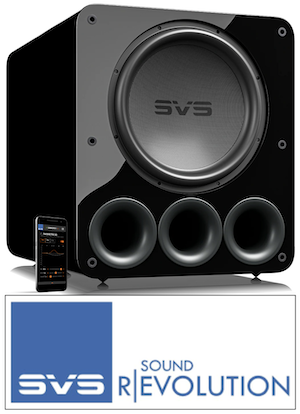
SVS R|Evolution Soundbar
SVS entering the soundbar market wasn’t something I necessarily saw coming, which is part of what makes the R|Evolution Soundbar so interesting. This is a company with enormous credibility in subwoofers and traditional loudspeakers, stepping into one of the fastest-growing areas of home audio, and it isn’t approaching the category with a stripped-down lifestyle product. The main soundbar uses a dedicated three-way architecture for its left, center, and right channels, with nine drivers and 180 watts of onboard amplification, while a purpose-built wireless subwoofer brings a 12-inch high-excursion driver and 600 watts of continuous power into the mix. Owners will also be able to add a second subwoofer and wireless surrounds, expanding the system into a discrete 5.2-channel package without adding an AVR, speaker wire, or the installation demands that come with a conventional theater system.
The R|Evolution Soundbar was originally expected much sooner, but after talking with SVS President Gary Yacubian at CEDIA, I actually came away feeling positive about the delay. The company is currently targeting the second quarter of 2027 and is clearly willing to keep working until setup, wireless speaker pairing, Auto EQ, and the overall user experience behave the way SVS wants them to from day one. Getting my hands on the hardware at CEDIA also helped complete the picture. The fit and finish looked excellent, the surrounds were compact and easy to imagine disappearing into a living room, and the ability to build around one or two legitimate SVS 12-inch subwoofers gives the system an intriguing advantage. There’s a lot of potential here, and seeing a company with SVS’s loudspeaker and subwoofer pedigree take the soundbar category this seriously made R|Evolution an easy Best of Show selection.
Theory Audio Design's p9 Pendant Loudspeaker

It's always a treat to spend time with Theory Audio Design CEO Paul Hales, as he's one of the more charismatic and engaging people in the industry, and over the years I have been fortunate to get to know him through interviews and demonstrations. Truth be told, every year I look forward to hearing what he and his team have pulled together for CEDIA because the Theory/Pro demo room routinely delivers sound reproduction that borders on ridiculous. This year was no different. By the time I arrived for my time slot, the room was packed, and the line was stretching down the hallway, which says quite a bit about the reputation Hales and his products have built. Fortunately, Theory had held a seat for me, and what followed was one of those demos that immediately reminded me why the room draws that kind of attention.
The surprise this year was Theory's new p9 pendant loudspeaker, a design that's visually compact and fairly unassuming, but what it produces literally defies any expectation you might have. Two p9s hanging overhead filled a roughly 30-by-30-foot space with sound that was expansive, dynamic, and remarkably difficult to localize to the speakers themselves. We heard everything from club and house tracks with serious energy to music built around delicate female vocals, and the p9 handled all of it with a combination of scale, articulation, and ease that was honestly hard to reconcile with what I was seeing. Its 9-inch coaxial driver, carbon fiber sandwich diaphragm, wide 120-degree dispersion, and claimed extension to 45 Hz help explain some of what I heard, but specs don't fully capture the experience. Best put, the p9 was smile-inducing, ear-pleasing, and flat-out jaw-dropping. It's a wonderfully unconventional-looking speaker with performance that reaches far beyond what its appearance suggests. Honestly, it made for one of the most memorable audio demonstrations I heard at CEDIA 2026.
Trinnov Audio's WaveForming with Two Subwoofers Technology
Trinnov Audio has attracted tremendous attention with WaveForming since the technology first arrived, and at CEDIA 2026, the company showed it isn't finished pushing the concept forward. The latest evolution allows WaveForming to operate with as few as two subwoofers positioned at the front of a room, with those subs acting as both emitters and absorbers. That's an important development because the more elaborate WaveForming installations we've seen rely on multiple subwoofers positioned at both the front and rear of a theater. As impressive as those systems can be, not every room has the space, wiring, budget, or physical layout to accommodate them. Bringing some of WaveForming's control over bass decay and room behavior to a much simpler two-subwoofer arrangement opens the technology to a considerably broader range of theaters and media rooms.
I had a great conversation with Trinnov's David Pedigo about how the new approach works, where its limitations lie, and how performance compares with traditional WaveForming installations. I'd definitely encourage readers to watch the accompanying interview. Pedigo has a knack for making some seriously complicated technology relatable without watering it down, and our conversation does a nice job of explaining why two-subwoofer WaveForming matters. Even better, Trinnov plans to make the capability available as a free software update for Altitude owners, another example of the company's longstanding commitment to expanding what its processors can do after they're installed. WaveForming was already one of the more unique bass management technologies in high-end home theater, and finding a way to make it practical for simpler systems is exactly the kind of continued development I like to see. Trinnov remains one of the leaders in AV processing, and this technology was easy to recognize with a Best of Show award.
Last edited: