






(February 27, 2026) Most strive to hear music the way it was meant to be heard. We buy better headphones. Some may upgrade cables. We chase higher bitrates. But very few devices stop to ask a simple question first: how well do you actually hear?
Astell&Kern is tackling that question head-on with the introduction of the PD20, a new flagship digital audio player built around something it calls Personal Sound. Rather than delivering a fixed sonic profile and leaving the rest to EQ tweaks, the PD20 begins by measuring the listener.
Developed in collaboration with Audiodo, the system performs a short hearing assessment using included earphones. The player analyzes left and right ears independently, then generates a tailored listening profile designed to compensate for imbalances or sensitivity differences. In practice, that means the PD20 isn’t just playing back a file at high resolution. It’s reshaping that signal based on how you hear it.
For longtime headphone enthusiasts, that’s a meaningful shift. Hearing asymmetry is common, especially as listeners age, yet most portable players treat both ears as identical. The PD20 attempts to close that gap before a single track begins.
That personalization layer sits on top of what is otherwise a technically ambitious player. The PD20 uses a quad-DAC configuration built around four ESS ES9027PRO chips, each operating independently to reduce crosstalk and enhance channel separation. Astell&Kern’s proprietary ESA, or Enhanced Signal Alignment, is designed to minimize group delay by precisely aligning frequency signals before they reach the output stage.
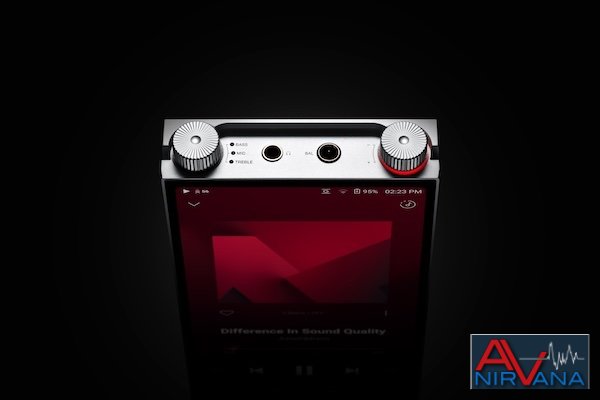
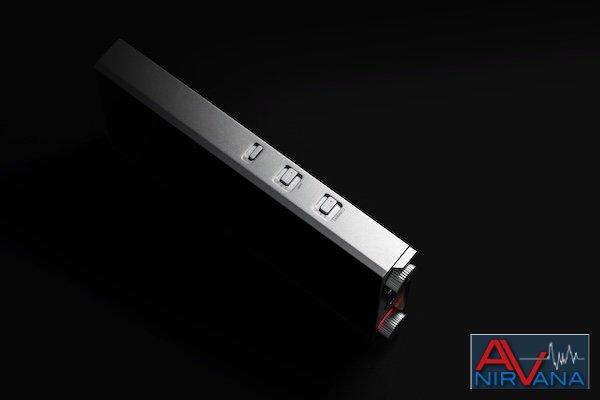
Amplification is equally flexible. The PD20 employs a Triple AMP architecture with physical switching between Class A, Class AB, and Hybrid modes. Class A is positioned for density and smoothness. Class AB emphasizes efficiency and dynamic control. Hybrid blends characteristics of both. A dedicated slide switch makes mode changes immediate, without diving into menus.
The current output can also be adjusted to three levels. High is intended for demanding, high-impedance headphones. Mid balances density and clarity. Low reduces the noise floor for sensitive in-ear monitors. In other words, the player treats amplification as part of the listening equation rather than a fixed stage behind the scenes.
Beyond its Personal Sound system, the PD20 also offers unusually granular tone control. A Sound Master Wheel provides 160-step EQ adjustment from –8.0 dB to +8.0 dB across bass, midrange, and treble bands, allowing real-time refinement without stopping playback. Dual top-mounted wheels separate volume from tonal shaping, reinforcing the “sound lab” design concept Astell&Kern references.
Upsampling and signal processing are handled through Advanced DAR, the company’s second-generation Digital Audio Remaster technology. Before upsampling occurs, audio passes through a Virtual Sound Extender stage that attempts to reconstruct lost harmonics. DAR processing is then applied for further refinement. The goal, according to Astell&Kern, is a more natural presentation that remains faithful to the original recording while enhancing perceived depth.
Spatial playback also enters the mix via Audiosphere technology. Four selectable presets, Subtle, Balanced, Immersive, and Echoic, expand two-channel audio into a virtual three-dimensional field. For listeners who prefer a speaker-like presentation, Crossfeed blending is available with adjustable parameters including shelf cutoff, shelf gain, and mixer level.
From a format standpoint, the PD20 supports native playback of PCM up to 32-bit/768kHz, and DSD512. Files can be stored internally on a 256GB drive, expandable to 2TB via a microSD card. Connectivity includes dual-band Wi-Fi, DLNA, USB digital output, and USB-C for data transfer and charging. The unit can also function as a USB DAC for Mac or Windows systems and supports Bluetooth codecs, including aptX HD and LDAC, as well as BT Sink mode to receive audio from external devices.
The player features a 6" FHD+ display, LED indicators for real-time bit-depth confirmation, ReplayGain for consistent playback levels across tracks, and AK File Drop for wireless file transfers across the same network. USB PD 3.0 fast charging allows a full charge in roughly three and a half hours. Roon Ready certification is pending.
The Astell&Kern PD20 will be available in late March with a suggested retail price of $1,970.
Related Reading:
- NEWS: Px8 S2: Bowers & Wilkins’ New Flagship Wireless Headphones Bring Premium Sound and Design
- REVIEW: Px7 S3 Wireless Headphones Reviewed: Bowers & Wilkins' Best Over-Ears Yet?
- REVIEW: Bass Through Your Bones: H2O Audio's TRI 2 PRO Waterproof Open Ear Headphones Review
- NEWS: Meze Audio Primed to Launch New 105 SILVA Headphones and Ultra Silver Cable at HIGH END Munich